From Incretin Discovery to Tirzepatide: A Short History of a Gut Hormone Mystery That Changed Modern Medicine
Tirzepatide is the end of an incretin story that began in the early 1900s, when scientists first noticed that something in the gut helps the body manage blood sugar after a meal. Those gut hormones, called incretins, take cues from your food the way a good event planner takes cues from the guest list: they signal the pancreas to release insulin at the right moment. Read on for the full timeline, or get a quick look at more on this compound if you’re curious about the research side.
The path wasn’t smooth. GLP-1, the best-known incretin, breaks down in the body within minutes, a bit like a perfectly plated appetizer that wilts before it leaves the kitchen. Researchers spent years designing longer-lasting versions, which led to the first generation of GLP-1 medicines. Tirzepatide took the next step by working on two gut-hormone pathways at once, GIP and GLP-1.
Here’s the short version of how we got from a curious lab observation to a dual-agonist medicine, told in plain language. As always, talk with a healthcare professional and check official sources for current medical guidance.
The Big Idea: What Are Incretins, in Plain English?
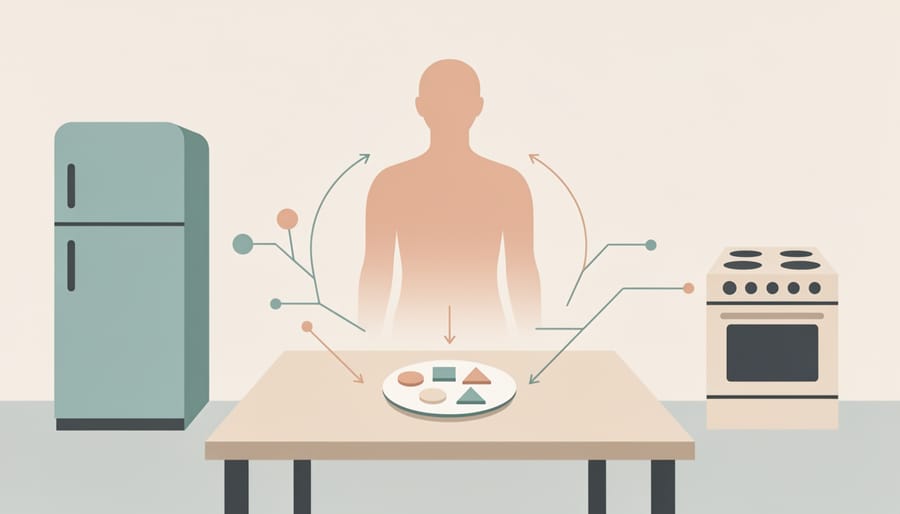
Picture the moment before a big catered event. The kitchen team doesn’t wait until the first plate lands on a table to get moving. A coordinator hears the guests are arriving and passes the word along, so everyone is ready. Your body does something similar every time you eat.
Incretins are hormones released by the gut after you eat. Think of them as the event coordinator, sending a quick message to the pancreas: the meal is on its way, so get ready. In response, the pancreas releases insulin, the hormone that helps move sugar out of the bloodstream and into the cells that use it for energy. Incretins also help signal fullness to the brain, which is why they matter for appetite as well as blood sugar.
Two hormones do most of this work. The first is GIP, short for glucose-dependent insulinotropic polypeptide. Yes, it’s a mouthful, so most people just say GIP. The second is GLP-1, short for glucagon-like peptide-1. Both are released from the gut after a meal, and both nudge the pancreas to respond. Like two coordinators working the same event from different stations, they have overlapping jobs but slightly different styles.
You don’t need the fine print to follow the story ahead. Just keep this picture in mind: a well-timed signal from the gut helps the whole system run smoothly. That simple idea launched decades of research and, eventually, a new class of medicines.
From Hunch to Proof: The Early Incretin Story
Early Clues From the Gut (1900s to 1960s)
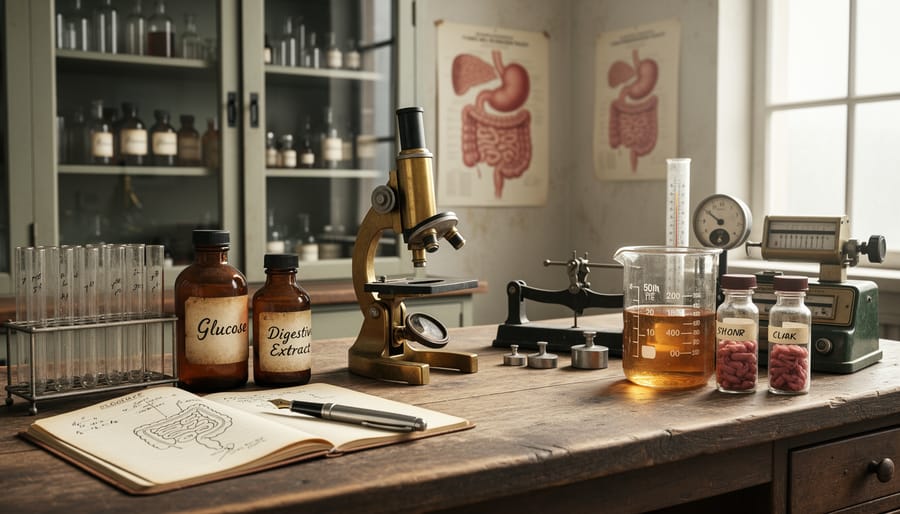
Long before anyone had a name for it, scientists suspected the gut was doing more than digesting dinner. In the early 1900s, researchers tried feeding extracts of intestinal lining to people with diabetes, hoping some hidden substance there could help lower blood sugar. The results were inconsistent, but the hunch stuck. Think of it like a kitchen where the line cooks seem to know the order is coming before the ticket prints. Something was passing the message along.
In 1932, the Belgian researcher Jean La Barre gave that mystery a name: “incretin,” shorthand for a gut factor that boosts the body’s insulin response. The big proof came in the 1960s. When people drank glucose, their insulin rose much higher than when the same amount of sugar went straight into a vein. The sugar load was identical. The difference was the gut’s involvement. Researchers later described gut factors from oral glucose as a likely explanation, and this became known as the “incretin effect.”
| Era | Milestone | Why it mattered |
|---|---|---|
| Early 1900s | Intestinal extracts tested for blood sugar effects | Planted the idea that the gut sends signals |
| 1932 | “Incretin” coined by Jean La Barre | Gave the mystery a name and a research focus |
| 1960s | Oral glucose shown to trigger more insulin than intravenous glucose | Confirmed the incretin effect |
Finding GIP and GLP-1 (1970s to 1980s)
Once the “incretin effect” was on the table, the next question was obvious: which gut hormones were actually behind it? Think of it like tracing a standout flavor in a dish back to its ingredients. Researchers had to isolate each one before they could understand what it did.
The first major find came in the early 1970s, when scientists purified a hormone from the intestine that stimulated insulin release after eating. They called it GIP. It looked like a strong candidate for the long-sought incretin, and for a while it stood alone in that role. But the data kept hinting that the full picture needed more than one player. Researchers who studied GIP and GLP-1 as incretins came to see them as a pair working side by side.
GLP-1 arrived in the 1980s, and its discovery took some clever detective work. Scientists studying the gene that makes the hormone glucagon noticed that the same blueprint also produced a related peptide in the gut. Once they worked out which fragment of that peptide was active, a promising picture emerged. GLP-1 nudged the pancreas to release insulin when blood sugar was elevated, and it also seemed to quiet the signal that raises blood sugar.
Over time, researchers noticed something else. GLP-1 appeared to slow how quickly the stomach empties and to influence feelings of fullness. That appetite connection turned a useful blood sugar hormone into something far more intriguing, and it set the stage for everything that followed.
The Hurdle: Great Hormones That Disappear in Minutes
Here’s the catch that slowed everything down: natural GLP-1 doesn’t stick around. Once it’s released, an enzyme in the body called DPP-4 chops it up, and its useful life is only a couple of minutes. A medicine that vanishes before it can do its job isn’t much of a medicine.
Think of it like a delicate sauce that falls apart the second it leaves the stove. The recipe was brilliant, but the technique to keep it stable on the way to the table was missing. Researchers had the right “flavor” in GLP-1 and needed a way to stop it from fading so fast.
Early on, that left scientists in a real bind. Injecting the hormone itself wasn’t practical, since it would be gone almost as soon as it arrived. They needed either a sturdier version or a way to slow the breakdown.
Then came one of the most charming plot twists in medical history. Researchers studying the venom and saliva of the Gila monster, a slow-moving lizard from the American Southwest, found a compound called exendin-4. It acted a lot like GLP-1 in the body, but the enzyme that dismantled natural GLP-1 struggled to break it down. In kitchen terms, it was the same dish made with a smarter, longer-lasting method.
That discovery mattered because it proved the idea could work. A GLP-1-style signal could be kept active long enough to be useful. It gave scientists a blueprint, and a reason to keep experimenting with more durable designs.
This is general background, not medical advice, and anyone with health questions should speak with a healthcare professional.
The First Wave: GLP-1 Medicines Arrive
The first GLP-1 treatment reached the market in the mid-2000s, and it was a direct descendant of that Gila monster discovery. Exenatide, a lab-made version of exendin-4, was approved for type 2 diabetes and gave doctors something entirely new: a medicine that nudged the body’s own blood sugar system instead of just forcing sugar down. Early versions had to be injected twice a day, a bit like a dish that needs constant attention at the stove.
Researchers soon refined the recipe. By tweaking the structure of GLP-1 so it lingered in the body longer, they developed once-daily options and, later, once-weekly injections. Moving from several doses a day to a single weekly one made treatment far easier to fit into everyday life, much as a well-planned buffet frees the host to enjoy the party.
Something interesting showed up along the way. People using these medicines often reported feeling fuller sooner and thinking less about food, and many lost weight. That was not the original goal, but it sent scientists back to the drawing board with fresh questions about how gut hormones talk to the brain about hunger and satisfaction. What began as a diabetes story started to look like a bigger story about appetite itself.
Following those clues, researchers designed studies that looked specifically at weight management, using higher-dose versions of GLP-1 medicines. Those programs led to products approved with weight management as their main purpose, a notable shift from the earlier diabetes-only focus.
This first wave proved the concept, showing that a patient-engineered version of a gut hormone could work as a real treatment. It also set the stage for the next idea: if one hormone signal helps, what might two do?
Enter Tirzepatide: Two Hormones, One Medicine
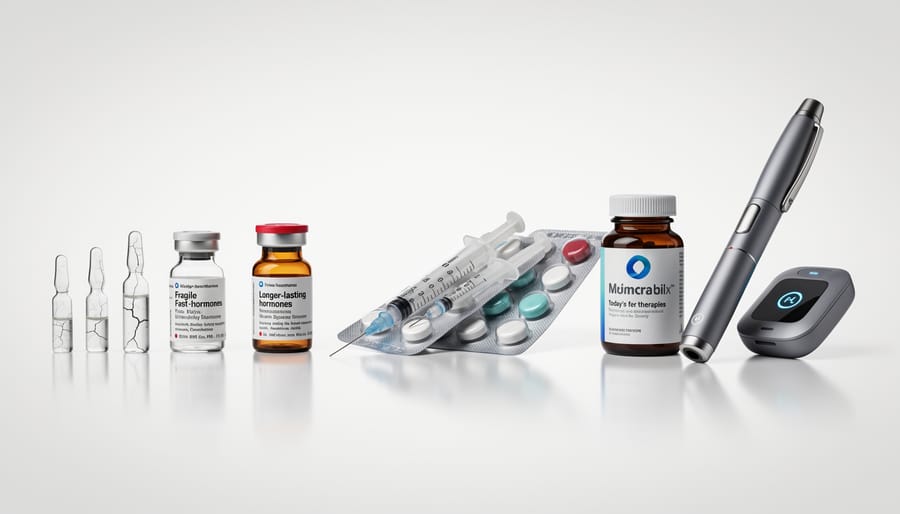
Think of a first-rate tasting menu. The earlier GLP-1 medicines were like a dish built around one star ingredient, done beautifully. Tirzepatide asks a bolder question: what if two flavors worked together?
That’s the idea at its core. Earlier medicines mimicked one gut hormone, GLP-1. Tirzepatide was designed to mimic two, GLP-1 and GIP, the same pair of hormones we met earlier in the story. Scientists call this a “dual agonist,” which is just a technical way of saying it works with two hormone signals at once. Since both hormones help the body respond to a meal, the thinking was that using both might offer something a single signal couldn’t.
The medicine was developed by Eli Lilly, and its journey through research followed the familiar path from lab bench to clinic. Two large clinical trial programs did much of the heavy lifting. The SURPASS program studied tirzepatide in people with type 2 diabetes, while the SURMOUNT program looked at its role in weight management. Think of them as the extended test kitchen, where a promising recipe gets tried, adjusted, and tried again before anyone calls it ready.
Regulators took notice. In 2022, tirzepatide was approved in the US for type 2 diabetes, and an approval for weight management followed. It was a milestone that built directly on decades of earlier work, from the first incretin clues to the first generation of GLP-1 treatments.
A quick note, as with any story like this: approvals, labels, and trial data keep evolving. If you want current details, official sources such as the FDA and the manufacturer’s prescribing information are the best places to look, and a healthcare professional can speak to what’s right for any individual.
What This History Teaches Us (And Why It Matters Beyond the Lab)
The story from incretin discovery to tirzepatide is a lesson in patience. Nobody set out to build a blockbuster medicine. Researchers noticed that sugar taken by mouth behaved differently from sugar delivered through a vein, and they kept asking why. That small observation took decades of follow-up work, from naming the hormones to figuring out how to keep GLP-1 from vanishing within minutes. Every step leaned on the one before it.
Anyone who has planned a big event will recognize the pattern. A standout menu is never a single lucky idea. It starts with thoughtful sourcing, local and seasonal ingredients where possible, then careful technique, and finally a team of cooks, servers, and planners who trust one another’s craft. Skip any link in that chain and the whole plate suffers.
There’s a practical takeaway too. Science moves forward when people build on what came before, and good hosting works the same way. It also means making responsible choices with the best information available. If you or a guest has dietary or health considerations, a conversation with a healthcare professional comes first, just as it should before finalizing any event menu.
Common Questions About the Incretin Story
Curious minds usually have a few follow-up questions after a story like this, so here are quick, plain-English answers.
What is an incretin?
An incretin is a hormone released by the gut after you eat. It helps the body manage blood sugar and plays a role in appetite, much like a coordinator signalling that the meal is on its way.
Who discovered GLP-1?
No single person gets all the credit. Researchers in the 1980s identified GLP-1 as a key incretin hormone, building on decades of earlier gut-hormone work.
Is tirzepatide the same as earlier GLP-1 medicines?
Not quite. Earlier medicines mimic GLP-1 alone, while tirzepatide is designed to work with both GIP and GLP-1 signals.
Why did it take so long to develop these treatments?
Natural GLP-1 breaks down within minutes, so scientists needed years of careful testing to create versions that last long enough to be useful.
Of course, this is general background, not personal guidance. Decisions about any medication, or about how your eating plan fits your health, belong with your healthcare provider.
That same spirit of checking in first applies to event planning. When guests have dietary or health needs, a quick conversation up front makes the menu better for everyone. If you’re planning a celebration, browse our summer wedding dishes for seasonal inspiration, explore these wedding dessert ideas for a sweet finish, or see our guide to kosher catering companies if specific dietary traditions matter to your gathering.
From a few curious observations about how the gut talks to the pancreas, to the identification of GIP and GLP-1, to the clever fix that kept those fleeting hormones working long enough to matter, the road to tirzepatide took decades of patient effort. No single person finished the job. Each researcher, each trial, and each small discovery added another layer, much like a great menu that comes together through careful sourcing, steady technique, and a team that trusts the process.
It’s a good reminder that lasting breakthroughs rarely arrive in a flash. They’re built slowly, together, on the shoulders of what came before. And since this history is general background, anyone with health questions should check in with a healthcare professional.
Here at Rashers-Toronto Catering, we love stories like this because they echo how we work: fresh ingredients, sustainable choices, and globally inspired flavours that bring people to the table. Stick around and explore more stories and ideas from our kitchen.